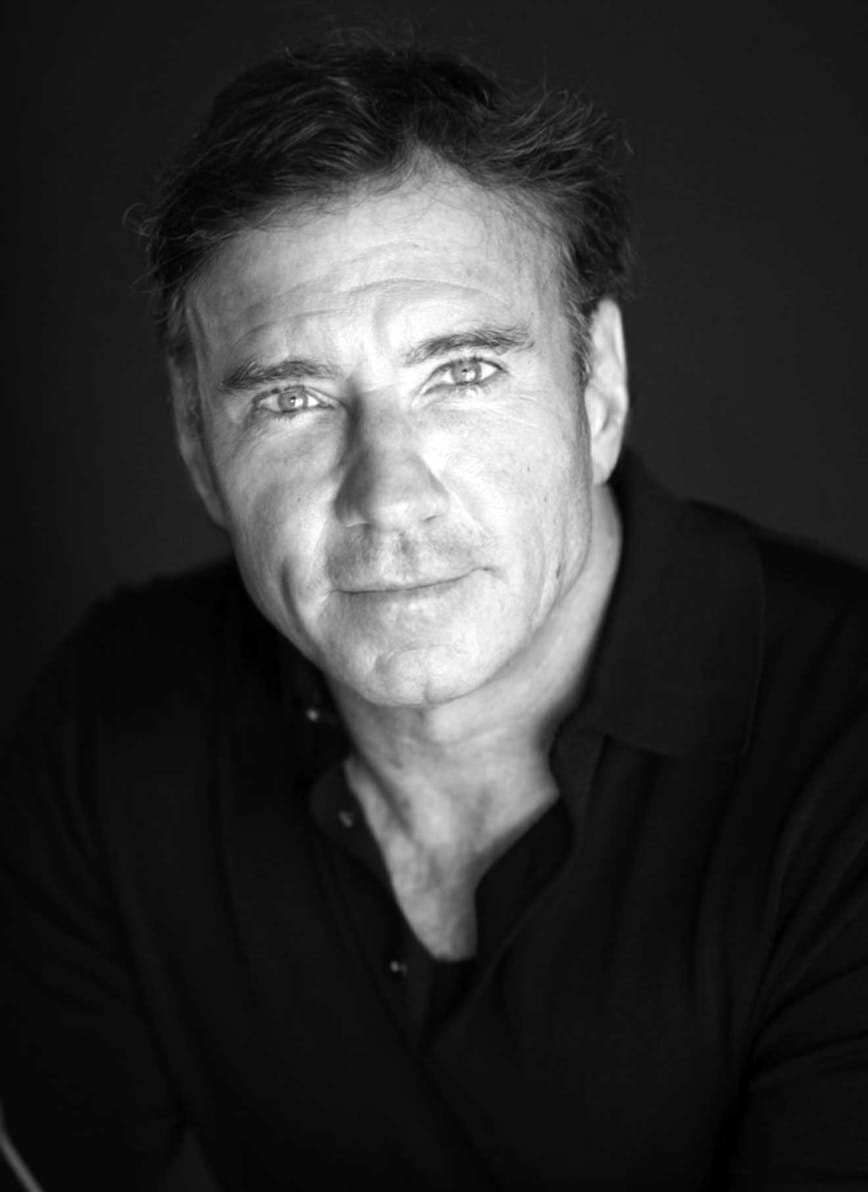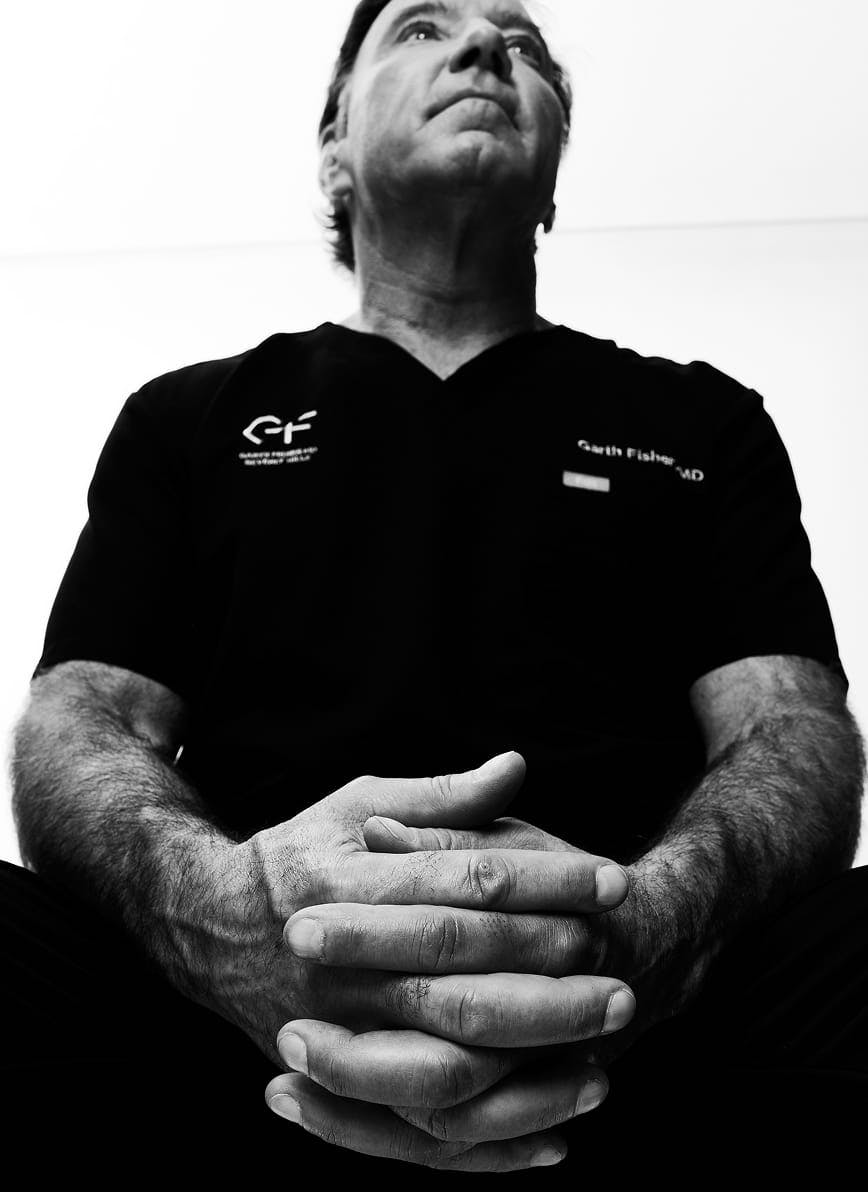
Garth Fisher M.D.® F.A.C.S.
Board Certified Plastic Surgeon
Beverly Hills, California USA

CellCeuticals® Skin Care Inc
Cofounder and Chairman

Biomedical Skin Treatment Institute®
Founder and Director

2008 INTERVIEW LA STORY

Source: Garth Fisher M.D.FACS,
"The Naked Truth about Plastic Surgery"
"The Insiders Guide to Plastic Surgery" (The Naked Truth about Plastic Surgery"

1. What do patients need to know before they go under the knife? Should the anesthesia be local or general?

Should a procedure done under general anesthetic be done in a full certified outpatient surgery center or is an office surgery center enough? what about a hospital?

Should procedures done under general anesthesia be performed at a certified out patient surgical center or office surgery center, hospital?

The issue raised in this question is how does a consumer / patient assess the quality of the facility where surgery is to be performed. This is a critical question and one that deserves ample attention since most patients simply trust their surgeons.

Each state regulates facilities (surgical centers) differently. Most states regulate facilities much like they regulate and license doctors, through its medical board. Hospitals are a bit different but we'll get to that.

As little as ten years ago a doctor with a medical license could operate a facility under the authority of that license. That has changed. They are several agencies that regulate and certify facilities, most are national. Certifying agencies assure compliance with standardization in the organization.

Credentialing (The doctor and nursing staff is properly trained to perform the surgery at issue)
Safety (The facility adheres to standards that assure a proper safety in terms of equipment, training of staff, pharmaceuticals, etc.) Part of this standard is that the facility has a method of evacuation in case of fire, earthquake or natural disaster. The facility should have an agreement in place with a nearby hospital to transfer emergencies.
Confidentiality and safety (All patient files are secure and protected from intrusive non members)

Patients must gain admittance to a facility feeling secure in their personal safety from their surgeon and the organization that cares for them. Of course there are many other issues but most fall under these broad categories.

The various agencies have web sites and contact information available for review and inspection.

The Joint Commission is the oldest and most respected; in the early 1990's they added to its hospital accreditation, out patient surgical centers.

AAAHC (American Association of Ambualtory Health Care) is another, as is the organization under the plastic surgery group, AAAAPSF. This latter one only certifies plastic surgery centers and the physician must have board certification in plastic surgery to be a member. State license through Medicare also is a method of accreditation. The Joint Commission also provides accreditation through Medicare by "deemed status".

Now to answer the question, surgery requiring general anesthesia should always be performed at an accredited facility (surgical center or hospital) as such accreditation assures the consumer that the standards are met and reviewed at least every three years. It also assures the consumer that oversight exists and complaints can be filed.

2. What questions should patients ask before having plastic surgery?

This is the most crucial thing. People have no clue what to ask.

Signed by Doctor or office representative

3. What does it mean to be "Board Certified"? How does one check on the board certification? what if the doctor is a DDS or some other doctor other than a plastic or cosmetic surgeon?

Finding your Plastic Surgeon

Selecting a plastic surgeon can be a difficult and confusing process. In the end, it is a personal decision that each patient must make for him/herself. We can, however, offer some advice, which many patients have found helpful during the selection process:

Board Certification: Strongly consider that your plastic surgeon is certified by the American Board of Plastic Surgery (organized in 1937). This is the only plastic surgery board recognized by the American Board of Medical Specialties (ABMS)! You can check to confirm that your surgeon has had this extensive and unique training in plastic surgery and successfully passed the exams by either asking him or checking with the American Board of Plastic Surgery at (215) 587-9322. Being a board certified plastic surgeon is also a membership requirement in order to belong to certain voluntary professional societies such as the American Society for Aesthetic Plastic Surgery (ASAPS) and the American Society of Plastic Surgery (ASPS); therefore, membership in these societies, though not an indicator of professional or artistic skill, can serve to confirm that your plastic surgeon is board certified by the American Board of Plastic Surgery. However, a plastic surgeon can also be board certified without being a member of these voluntary societies.

Although being board certified by the ABMS reflects unique and extensive training, it unfortunately does not assure you that your surgeon will have the skill level to provide you with the results you want. Remember, there are many talented surgeons certified by other specialty boards with whom you may feel a special connection. Such surgeons may have excellent surgical skills and may be able to provide you with quality results.

4. How do you know if your doctor is licensed?--where would one check? How worthwhile is it to check a physician's references and speak to other patients?

Every state has a medical board whose purpose is to protect the public. State boards may have a different name but they are reasonably similar. They all have on line ability to verify the license of physicians and the ability to determine if that practitioner has been disciplined by the board for unprofessional behavior. It is always worthwhile to speak with other patients who have sought care from your doctor to evaluate their personal point of view, however review their opinions carefully and develop a list of questions that help you evaluate your care giver. Assessing a physician should be based on a number of different factors.

5. How common are plastic surgery complications? What should a patient do BEFORE surgery to make sure they are healthy and a good candidate for surgery?

Complications frequently occur with plastic surgery procedures and vary greatly depending on type of surgery and the surgeon performing it. To diminish the risk of complications, patients should try to educate themselves as much as possible about the procedures, their risks, benefits, alternatives, and the post operative healing course. They should make sure they are in good health, often with a medical clearance from a solid physician specializing in Internal Medicine or Cardiology, and they should pick a plastic surgeon who is conservative, honest, and talented. They also should commit themselves to taking the appropriate time to recover and to follow all postoperative orders carefully.

6. What risk factors for patients can enhance their risk?

What should they do post op to make sure they get a good result? What's the most common mistakes that a patient makes?

(See Insiders guide on Tips for obtaining a natural result). Patients can lower their risk by following the paragraph described above. Getting a good result is really the tug of war between the talent of the doctor and the expectation of the patient. Find a doctor who will give you an honest and frank impression of what he can accomplish, and find a surgeon who has the skill to achieve that. As a patient, it is your responsibility to have reasonable expectations.

7. If a patient opts to go under the knife-- local anesthetic liposuction and facelifts have emerged onto the market. What should one know? What should one ask about?

Sometimes it is absolutely fine to have these procedures performed under local anesthesia. You can have safe and well done above procedures under local anesthesia and you can also have unsafe and poorly done procedures under local anesthesia. The main thing to avoid is having your doctor advise a local anesthetic because it is less expensive. Saving money in this way is not advisable or more important than the priority of safety. Many times, a local anesthetic can be more dangerous than a general anesthetic. Make sure that you have a "separate and qualified" health care provider attending to your anesthesia needs.

8. What are the least invasive procedures that can be today?

(Injectables, microdermabrasion, lasers ( fraxel, fraxel repair ),peels (phenol, other kinds of peels) . What are the pluses and minuses in terms of results?

Both lasers and injectibles are minimally invasive procedures. Lasers use light beams to reach beneath the surface of the skin to destroy damaged skin and create new growth of deeper layers of skin. There are various types of lasers which both resurface the skin, tighten the skin and destroy pigmented lesions as well as reduce hair follicles.

Injectibles are often considered "lunchtime procedures" because they can be performed in less than an hour and often in 20 to 30 minutes. Juvederm, Restylane, Perlane and now Prevelle which has lidocaine in it are all quick "lunchtime procedures". All areas of the face can be injected and the patient can go back to work without evidence of a procedure (except lips which can swell a little). Juvederm generally swells less in the lips. From numbing to injection is usually door to door within a half hour.

Botox is the most familiar agent and this product paralyzes small muscles that cause frowning and furrowing to relax.

9. If someone wants to do a serious peel (not an aesthetician peel) what should they ask about? What about recovery time? Who is not a good candidate?

The recovery period varies with the type and concentration of the peeling agent. The higher percentage of TCA the deeper the peel, the longer the recovery period, the greater the risk, and often the more dramatic the results. Phenol is probably the most aggressive and risky peeling agent available. Most of these peels are now being outdated with the newer technology that lasers provide. In general, the darker the skin, the more unfavorable the patient as the risks of permanent pigmentation increase.

COMPREHENSIVE AND FRANK OVERVIEW OF HOW TO SELECT A SURGEON

Selecting a Surgeon

Your selection of a surgeon is as important as your decision to undergo cosmetic surgery. It must be done in a thorough, well-organized manner. Your results will be directly proportional to the amount of effort you are willing to expend during your search. Although having a list of questions is a great first step, your interpretation of the answers is really the most important part. Once you understand how to ask follow up questions, you can drill down to a deeper level to get a sense of context. Emphasis on the need for reviewing qualifications, experience, training, post-operative photography and testimonials combined with open and honest discussions with the surgeon are among the necessary steps toward selecting the best surgeon for you. Toward that end we offer the following guidelines with explanations and examples to help you get the most out of every consultation.

All surgeons are not created equal.

Today's marketplace has seen an influx of surgeons wanting to supplement their practices with cosmetic cases. Did you know any licensed medical doctor can legally perform cosmetic surgery? The prospective patient must proceed with caution. At a minimum, selection criteria you use in evaluating a surgeon should include:

In order to perform cosmetic or aesthetic procedures at the highest level, a surgeon must complete at least a decade of additional specialized training after college. Some doctors elect to participate in specialized training called fellowships, in specific areas of interest within the specialty. (See below) These surgeons customarily hope to focus their practices on specialized areas in cosmetic and aesthetic plastic surgery.

Example: You are interested in liposuction and visit a doctor who advertises "cosmetic surgery." Other patients in the waiting room give you the impression that he/she is a general surgeon. Proceed with caution in this scenario as this is not the defined scope of practice for a "general surgeon"

Example: If you want breast augmentation, you may not be a good match for a reconstructive plastic surgeon whose brilliance lies in treating patients with burns, birth defects or cancer.

Questions: Are you a plastic surgeon? Tell me about your subspecialty training. What percentage of your practice is dedicated to reconstructive vs. cosmetic? What three to five procedures represent the majority of your cases?

Board Certification further defined.

Strongly consider that your plastic surgeon is certified by the American Board of Plastic Surgery. This is the only plastic surgery board recognized by the American Board of Medical Specialties. You can check to confirm that your surgeon has had this extensive and unique training in plastic surgery and successfully passed the exams by checking with the American Board of Plastic Surgery at 215-587-9322.

Keep in mind that while this is an important and prestigious credential, it will not guarantee that your particular surgeon will have the skill level to provide you with the results you want. Remember too, that there are many talented surgeons certified by other specialty boards with whom you may feel a special connection. Such surgeons may have excellent surgical skills and may be able to provide you with quality results. Some specialties you can expect to encounter during your search include: Dermatology, Otolaryngology (head and neck,) Ophthalmology (eye and facial) and Plastic Surgery (facial, body, reconstructive.) Again, it is very important that you consult with a surgeon who is not practicing beyond the scope of his or her training.

Example: You are considering an eye lift. You could get good results with a board certified plastic surgeon that routinely performs this procedure, or might be just as happy with an ophthalmic plastic surgeon whose training concentrated exclusively on the eye and areas around the eye.

Example: You are considering a breast augmentation. A "facial plastic surgeon" advertises that he or she performs them. It is probably wise to look elsewhere for someone who has appropriate training in breast augmentation. (Facial plastic surgeons should limit their practice to the face.)

Question: Are you board certified in the specialty specifically addressing the procedure in which I am interested?

Fellowship is not a social credential

A "fellowship" is an elite qualification that only a small percentage of surgeons performing cosmetic plastic surgery can claim. As noted above, a surgeon who has had an additional "fellowship" of training has completed focused and intense specialized training in a particular area of interest-- usually under the guidance of a well known and talented surgeon or group of surgeons. Fellowships typically last from 3 months to 2 years. This underscores a surgeon's interest, commitment, and experience in performing procedures in that area of specialization.

Example: Some plastic surgeons go on to complete fellowships and/or additional specialized training in aesthetic/cosmetic surgery, microsurgery, craniofacial surgery, hand surgery, breast reconstruction surgery etc.

Question: Are you fellowship trained in any area related to cosmetic surgery?

The RESUME: Tips for Evaluating a Surgeon's Professional Biography

Society Membership: Society membership is entirely voluntary. In many cases, it reflects the desire and ability of a surgeon to pay dues to that particular society. Some societies such as the American Society of Plastic Surgeons (ASPS) and the American Society for Aesthetic Plastic Surgery (ASAPS) require that their members are board certified before being eligible for membership. It should be noted that if you are considering aesthetic or cosmetic plastic surgery, the surgeons within the membership of the ASAPS are generally, possibly more focused on those particular procedures. Likewise, members of the "Rhinoplasty society" are more likely to have developed a unique interest in Rhinoplasty surgery. Again, membership in these societies are voluntary and not mandatory, and do not assure you of a particular skill level or the guarantee that you will have a successful surgery. There are literally hundreds of societies that plastic surgeons can join if they choose. Each doctor has to make a decision for themselves if becoming a member offers any advantages. There are thousands of very qualified and capable surgeons such as Dr Fisher who have made a conscious choice to not become a member or renew membership in the plethora of various societies.

Board Certification: Certification by the American Board of Plastic Surgery is the culmination of the extensive, rigorous, and unique training experience in plastic surgery. This training reflects a commitment, not only to the profession itself, but more importantly, to the consumers who seek our advice and expertise.

As a practical reality, arduous and meticulous training and examinations, unfortunately do not guarantee technical skill, measure artistic and creative endowment, or provide the assurance of exacting judgment in the operating room. (There are many surgeons who excel in test taking rigors, but lack the patience and meticulous skills demanded and required to plan and carry out extensive operative procedures.)

"FACS" after a doctor's name and "MD" (John Doe M.D. FACS) denotes that that doctor is a "Fellow of the American College of Surgeons". Only board certified surgeons are eligible for membership.

Publishing and professional committees: Many deserving doctors spend a great deal of their time writing and publishing scientific journal articles and serving on professional committees. Undoubtedly, this benefits all plastic surgeons and ultimately, all patients; however such service is no yardstick of their ability to perform exacting surgery. It is worth noting, that at consultations to evaluate professional skill, patients do not typically request information regarding managerial administration, journalistic reporting, or committee membership. Patients are seeking someone with whom they can communicate clearly, develop a trusting relationship and provide the best possible surgical result. Most physicians who choose to become members in various plastic surgical societies of our profession are not elected to steering committees and may not be proficient or interested in journalistic publication. Many are excellent technical surgeons with superb judgment, and they represent appropriate choices to perform demanding surgical procedures sought by consumers.

Media exposure: The fact that a surgeon has been featured in the media; on television talk shows, sought after to provide opinions in popular magazines or has authored articles for these magazines, is no indication he/she can operate with great skill and offer meticulous results. Employing talented public relations personnel does not necessarily equate with the deployment of an artistic scalpel.

The "Professor": The attainment of professorial status and rank at a major medical university does not provide assurance that such individuals will be able to achieve the operative goals patients' desire. Some who hold the academic rank of "professor" or "chairman" of a department have reached such positions because of political skills, desire to be in academic medicine, administrate and teach students, ability to publish journal articles, and aptitude at raising money for their departments. While these contributions are of inestimable value, and deserve the respect of the entire profession, they do not necessarily translate to gifted operating room skills and judgment.

Example: You have "surfed the web" and learned there are some surgeons in your area that seem to have strong affiliations with the university and have written papers on the latest techniques regarding your procedure. Doctor X has his own talk show. Doctor Y is on TV. Others just operate.

Question: Now, it is your turn to answer a question: While impressive, what makes academic status, media celebrity, far reaching marketing campaigns, and journalistic endeavors necessary indications of one's ability to perform exacting surgery? Many qualified surgeons advertise. Recognize these ads for the paid marketing campaigns that they are. Shouldn't you be cautious if you are promised outstanding results, ease of recovery or lowest price on a billboard?

During your consultations you should be evaluating surgical skill and results regardless of any other extracurricular activities the surgeon chooses to explore.

Properly evaluate referral sources.

Consulting with surgeons that have been recommended to you by satisfied patients is a great way to start. However, keep in mind your desired result may differ from theirs. Your individual anatomy will influence the results. In addition, are you considering the exact same procedure?

Example: Don't be too quick to draw a conclusion if your friend had a fabulous facelift, but you want liposuction. These are two very different procedures. Even if you are interested in a facelift, you must still be diligent in discussing your particular options with her surgeon because of the individual nature of each cosmetic surgery.

Excellent sources of referral are other medical personnel: doctors, nurses, anesthesia specialists, surgeons etc. A doctor's reputation is his life. Most important: Was this plastic surgeon recommended to as a surgeon other plastic surgeons would let operate on their own family members? That is the best referral.

Before and After Pictures

The surgeon's "before and after" album is full of clues if you know how to properly evaluate the photos. The "after" should look better, but not too different or exaggerated. Study the artistry and style - every surgeon is unique. Be certain both photos have the same lighting, angle, and profile. Hair, makeup and overall expression should be similar if you are studying the face. Beware of internet photography as it can easily be altered.

Questions: Can I see before and after pictures? Are these your work or generic photos? Can I meet or talk to a patient who has had the same procedure? Ask to see good results, excellent results and challenging cases.

Who is your Anesthesia Provider?

Ask your surgeon who he or she will be using to administer your anesthesia. Not all plastic surgeons utilize board certified anesthesiologists as the anesthesia provider. Some use non- certified anesthesiologists or nurse anesthetists. There is a marked difference between the two. Anesthesiologists are fully licensed doctors who have chosen to specialize in the area of anesthesiology. They must obtain a bachelor's degree after four years of pre-medical studies, four years of medical school resulting in an M.D. or D.O. degree, followed by a four-year anesthesiology residency program - for a total of twelve years. Board certification is obtained when an anesthesiologist meets the American Board of Anesthesiology requirements and passes both written and oral examinations. Board certification is not a guarantee but is an indicator of competency and depth of knowledge. Anesthesiologists are doctors first and then become specialists in the area of anesthesiology. By contrast, licensed nurse anesthetists obtain a bachelor's degree in nursing and then complete a two to three year nurse-anesthesia training program. One-year experience as an acute care nurse is mandatory. There are some "grandfathered" nurse anesthetists in practice today who have completed four years of total training to prepare them to administer anesthesia. While these anesthetists may have successfully administered anesthesia thousands of times, they are not doctors.

At the core of anesthesia practice is an understanding of the complex mechanisms of the human body in health and disease and how various chemical agents affect bodily systems. In addition to rendering you unconscious and having you awaken comfortably, anesthesia providers must be prepared to anticipate reactions and deal with changes in the patient's physiologic condition in a matter of seconds.

Location/Hospital Privileges

Be absolutely sure your surgeon has privileges in a nearby hospital to do the procedures you are considering. In the majority of cases, your operation will take place in a surgery center - either in an off-site facility, or within the doctor's office. However, in the event you have a complication and need to be hospitalized this privilege is critical. Privileges in a hospital are granted only after the facility has verified the training and experience requirements for the privileges requested. It provides an additional screening mechanism for your surgeon's credentials. Your surgeon's surgery center must be accredited for safety. There are three accreditation bodies: American Association for Accreditation of Ambulatory Plastic Surgery Facilities (AAAAPS) 847-775-1970, Accreditation Association for Ambulatory Health Care (AAAHC) 847-853-6063 and The Joint Commission on Accreditation of Healthcare Organization (JCAHO) 630-792-5800.

Questions: Where will the surgery take place? What accreditation does it carry? Who will administer the anesthesia? In which hospitals do you carry privileges? How close are they?

Some people want to combine their cosmetic desires with an exotic destination. Many of these surgeons promise lower fees and a luxury setting. Be wary of leaving the protection of U.S. standards behind.

Questions: Where were you educated? What credentials do you hold? What happens if there are complications? Who is administering the anesthesia? What do I do if I am not satisfied after returning home?

Dealing with the subjective

Integrity, compassion, good communication skills, perfectionism, solid judgment, an artistic eye. These are the personal characteristics most often cited by patients as those they would like their surgeon to have. They are also quite subjective. During your consultation be sure you take enough time to determine if there is a positive connection between you and the surgeon. Your deliberation will ultimately be a blend of both concrete answers and intuition.

Questions: (to ask yourself) Am I comfortable? Do I understand him/her? Are they taking enough time with me? Do they seem honest about risks, recovery, and my expectations? Am I getting a sense he/she is thorough and meticulous? Does he/she explain all the aspects of a particular procedure? Have I been given a clear vision of what is artistically possible and can he/she do it? Does he/she surround himself/herself with a topnotch staff?

Taking your time

Be a patient with patience. Don't rush. Most cosmetic procedures are elective, not emergencies. Time spent learning about your provider and options will pay great dividends in the long term. You should meet with a number of different board certified plastic surgeons for the purpose of hearing their recommendations of surgical and non-surgical alternatives. The surgeon may ask you to consider different or additional procedures than you originally intended. A good surgeon will tell you what can and cannot be achieved in accordance with your age, skin, body type, medical history and the limits of technology. If you are talking with a surgeon you trust, he or she should be able to explain why these procedures will enhance your overall result.

Consult with the one you ultimately choose as many times as necessary to feel comfortable with your decision. Take the advice seriously if more than one surgeon feels the risks of the surgery you are requesting outweighs the benefits.

Selecting a plastic surgeon can be a difficult and confusing process. Please consider reviewing additional information and questions offered on The Naked Truth tapes. Many patients have found these to be helpful during their search. In the end, it is a personal decision that each patient must make for him or herself.

"The Naked Truth"

The Award winning "Naked truth about Plastic Surgery" videos are incredibly comprehensive videos (1-2 hours each) covering common plastic surgery procedures. They will help you understand each procedure in great detail as well as the risks, benefits, and alternatives. The "Naked Truth" is aided by live video footage of patients just like you going through each procedure (no graphic surgery or blood), with hundreds of before and after photos, graphics, illustrations, and demonstrations. You will learn how to select a doctor, what questions to ask, and ways to make your consultation time more efficient, memorable, and effective. Please look at the testimonial section on the Naked Truth section of this website for further descriptions of the incredible value these tapes offer. Because you can review this information in the privacy of your own home with a loved one, it is the closest thing there is to a "house call!"

Best of luck!

Copyright © 2000-2010 Garth Fisher M.D.®, F.A.C.S. - All rights reserved.
Twitter - Glossary - Facebook - Contact Dr. Fisher - Sitemap

Web Development by Imaginary Trout