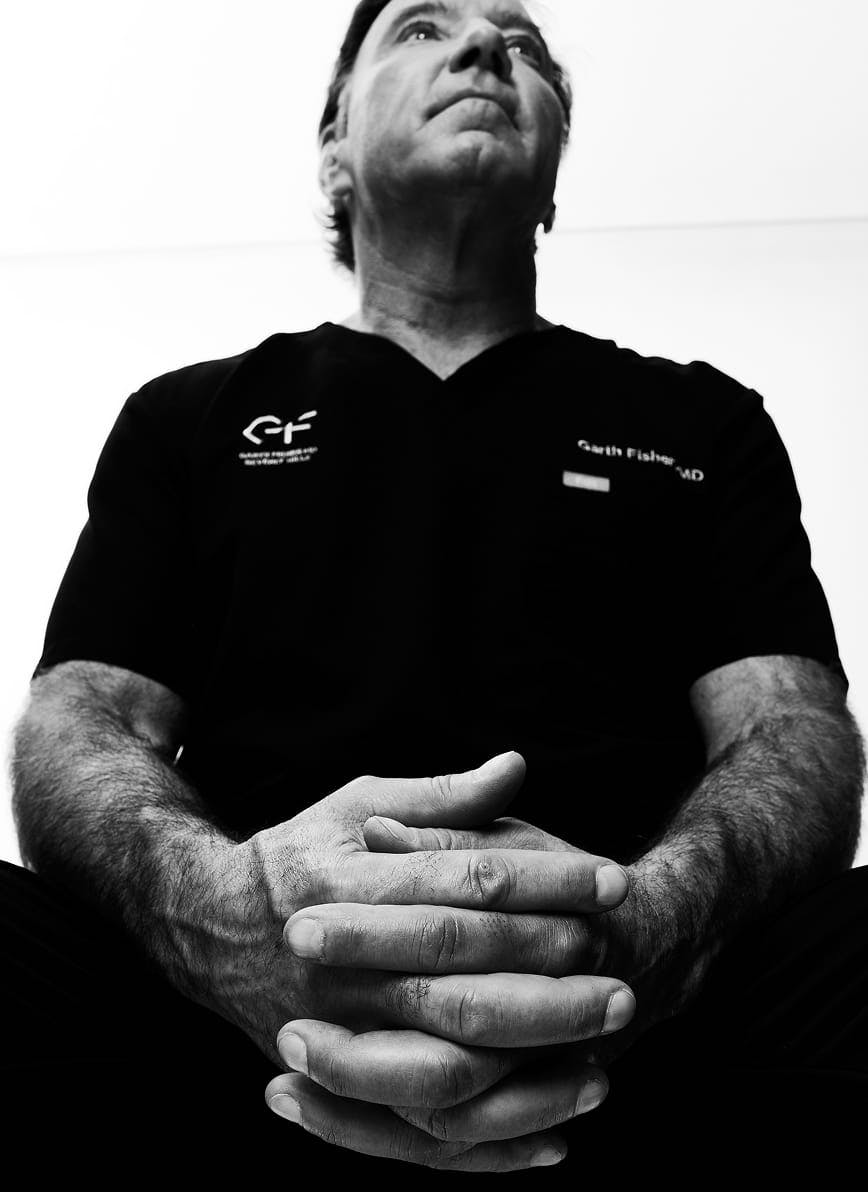
Choosing a breast implant size starts with volume, not cup size. Implants are measured in cubic centimeters (cc), and the right number depends on chest width, tissue quality, and the look a patient wants. For breast augmentation in Beverly Hills, Dr. Garth Fisher uses these measurements, along with in-office sizers, to recommend a size that fits the body it is meant for.
Breast augmentation remains one of the most requested cosmetic procedures in the country. According to the American Society of Plastic Surgeons, it was the most commonly performed cosmetic surgical procedure in the U.S. in 2024, with 306,196 cases tracked in its national statistics report. With that many patients asking the same question, a clear framework helps. Dr. Fisher has spent decades guiding patients through this decision, and the sections below explain how the process works.
How Breast Implant Size Is Actually Measured (CC, Not Cup Size)
Breast implant size is measured in cubic centimeters, a unit of volume that roughly equals one milliliter. A 350cc implant holds about 350 milliliters of saline or silicone. According to the American Society of Plastic Surgeons, surgeons typically select implants within a range of roughly 100cc to 800cc based on anatomy and goals.
Cup size is a poor stand-in for that number. Bra sizing varies between brands, and a C cup on a 32 band holds a different volume than a C cup on a 38 band. Two patients who wear the same cup can need very different implants to look balanced.
A few reasons cc is the more reliable unit:
- It measures actual implant volume, so it can be compared from one patient to the next.
- It stays consistent regardless of bra brand, band size, or fit.
- It lets a surgeon pair volume with width and projection for a specific chest.
Some patients still want to describe their goal in cup terms, and that is a fine starting point for a conversation. Dr. Fisher translates the goal into a volume range during the consultation, since a general rule of thumb of 150 to 250cc per cup size can shift considerably with body frame.
Typical Implant Volume Ranges and What They Look Like
Most primary augmentations fall in the middle of the 100cc to 800cc range, with smaller volumes producing subtle fullness and larger volumes producing a more pronounced change. The same number can look different from one patient to the next. A 400cc implant on a petite, narrow frame reads as larger than the same implant on a broad chest.
Profile is the second variable, and it changes appearance at an identical volume. Profile describes how far an implant projects forward relative to its base width. Lower profiles spread volume across a wider base for a gentler slope. Higher profiles concentrate the same volume into a narrower base, which creates more forward projection and a rounder upper curve.
Consider two 350cc implants. One with moderate profile may look natural and proportionate on a patient with a wider chest. One with high profile may suit a narrower chest where a wide base would extend toward the underarm. Neither is better in general. Each is better for a particular body.
Patients sometimes worry that choosing a modest size will leave them wishing for more later. Dr. Fisher addresses this directly by reviewing the proportions each option may create, so the decision rests on how the result may look on the patient rather than on a number alone. Patients considering a combined approach can also learn about breast augmentation with breast lift, which may suit those with some sagging.
Profile, Chest Width, and Tissue: The Anatomy Behind Your Recommendation
Chest width sets the practical ceiling for implant size. Dr. Fisher measures the width of the breast base, because an implant that extends past it can sit unnaturally toward the armpit or the center of the chest. Choosing a base width that fits the chest is what keeps the result looking like part of the body.
Tissue quality shapes what a given implant can do. Surgeons evaluate how much natural breast tissue is present, how thick the skin and soft tissue are, and how much skin elasticity remains. Thin tissue can show an implant's edges more readily, while stretched skin from pregnancy or weight change may limit how much volume it can comfortably support.
Several other factors enter the recommendation:
- Existing breast volume and shape, including any asymmetry between the two sides
- Nipple position relative to the fold beneath the breast
- Rib cage shape and overall frame
- Implant placement above or below the chest muscle
- Daily activity level and wardrobe preferences
Implant type can factor in as well. The U.S. Food and Drug Administration treats saline and silicone gel implants differently by patient age and use case, and its breast implant guidance outlines those distinctions. Clinical references such as StatPearls also describe how anatomical measurements inform size selection. Dr. Fisher weighs all of this together, since a recommendation built on one measurement alone may miss part of the picture.
Using Sizers During Your Beverly Hills Consultation
Sizers are non-surgical try-on implants that patients use during a consultation to preview how different volumes may look. At Dr. Fisher's Beverly Hills practice, the sizing step gives patients a visual reference before any surgical decision is made, which can make the conversation far more concrete than numbers on a page.
The process typically follows a simple order. After the anatomical measurements are taken, sizers in several volumes are placed inside a fitted bra or top. Patients look in the mirror, try different options, and discuss what they see with Dr. Fisher. Bringing a fitted top, or photos that show a look the patient likes, can help guide the discussion.
Sizers are a useful guide, though they are not a perfect preview. They rest on top of existing tissue, while a surgical implant sits beneath it, so the final appearance may differ somewhat. Dr. Fisher factors this into his recommendation and talks through realistic expectations before a size is chosen.
Patients who already have implants and are unhappy with their size can ask about breast revision surgery. The same measurements and sizing tools can help guide that decision.
Questions About Breast Augmentation in Beverly Hills? Dr. Fisher Is Here to Help
The right implant size comes from matching volume, profile, and chest width to the individual, not from chasing a cup size or a number. With decades of experience and thousands of patients, Dr. Garth Fisher approaches this decision with the goal of producing a result that looks proportionate and natural for each body. To learn more about breast augmentation and try sizers in person, schedule a consultation today.
This information is provided for educational purposes only and does not replace a consultation with a board-certified plastic surgeon. Outcomes, risks, and suitability vary from patient to patient.
Sources
- American Society of Plastic Surgeons: Breast Augmentation
- American Society of Plastic Surgeons: Interest in Aesthetic Health Remained Consistent Despite Economic Uncertainty in 2024
- U.S. Food and Drug Administration: Types of Breast Implants
- StatPearls, NCBI Bookshelf: Breast Augmentation